 Light Bulbs
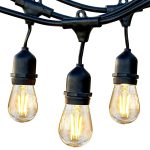
 Outdoor Lights
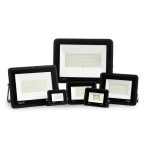
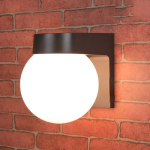

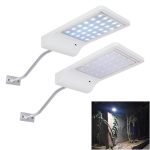
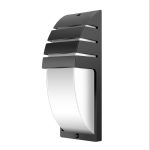

 Wall Lights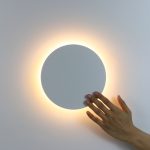



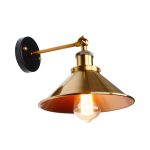
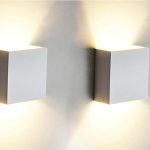

 Lamps
Lamps



 Ceiling Lights





The NO error on your Philips Projector means the projector is powered on and working correctly, but it isn’t receiving a video signal from the connected device. Check your cable connections and source device to fix this.
| Error code | NO |
|---|---|
| Meaning | No signal detected from the connected input source |
| Severity | Low — usually a simple connection or source issue, not a hardware fault |
| Time to fix | 2–10 minutes |
| Tools needed | None (occasionally a spare HDMI cable) |
What the NO error means
When your Philips projector shows a “No Signal” message, it means the internal electronics are functioning fine, but no video data is being received from whichever input you’ve selected — HDMI, VGA, or another source. This is one of the most common projector messages and rarely indicates a serious fault. It usually points to a loose cable, a source device that’s off or asleep, or the projector being set to the wrong input channel.
Common causes
- The source device (laptop, streaming stick, DVD player) is turned off, in sleep mode, or not outputting video
- The HDMI or VGA cable is loose, damaged, or not fully plugged into either end
- The projector is set to the wrong input source
- The connected device’s display output hasn’t been switched to external/duplicate mode
- A faulty or low-quality cable that can’t carry a stable signal
- The source device’s resolution or refresh rate isn’t supported by the projector
How to fix the NO error
- Check the cable connections — Make sure the HDMI or VGA cable is firmly plugged in at both the projector and the source device. Try unplugging and reseating it.
- Confirm the correct input is selected — Use the projector remote or menu to cycle through inputs (HDMI 1, HDMI 2, VGA) until you find the active source.
- Wake or restart the source device — If it’s a laptop, move the mouse or press a key to wake it. If it’s a streaming device, unplug and replug its power.
- Switch the source device’s display output — On laptops, press the display toggle key (often Fn + F4/F5/F8) to enable external display or duplicate screen mode.
- Test with a different cable — Swap in a known-working HDMI or VGA cable to rule out a damaged one.
- Restart the projector — Power the projector off, wait 30 seconds, then turn it back on and reselect the input.
If you regularly switch between devices, it’s worth comparing how other brands handle this same issue — for example, the Panasonic Tv NO Error Code: Causes and Fixes guide covers a very similar scenario on TVs.
FAQ
Why does my Philips projector say “No Signal” even though the cable is plugged in?
The cable may be loose, damaged, or plugged into the wrong port. Reseat it firmly and try a different cable or port to confirm it’s connected properly.
Do I need to select the input manually every time?
Some projectors auto-detect the active source, but many require you to manually select the correct HDMI or VGA input using the remote or on-device menu.
Could this be a hardware fault with the projector itself?
It’s unlikely. The NO error almost always relates to the connection or source device rather than the projector’s internal hardware. If all connections and sources check out and the error persists, contact Philips support for further diagnosis. This is a similar troubleshooting path used for other display issues, such as the Philips Tv ERROR Error Code: Causes and Fixes and Philips Tv ERROR Error Code: Causes and Fixes guides.