 Light Bulbs

 Outdoor Lights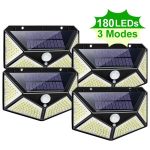

 Wall Lights




 Lamps
Lamps


 Ceiling Lights





The CS error on your Ge Freezer means the control board has detected a fault in the temperature sensor circuit or lost communication with the cooling system components. This usually points to a wiring issue, a failed sensor, or a control board glitch, and most homeowners can clear a temporary version of this fault with a simple power cycle.
| Error code | CS |
|---|---|
| Meaning | Control/sensor communication fault in the cooling system |
| Severity | Medium — freezer may still run but temperature control can be unreliable |
| Time to fix | 10–40 minutes |
| Tools needed | Multimeter (optional), screwdriver |
What the CS error means
CS stands for a communication or sensor fault between the main control board and the freezer’s temperature-sensing components. When the board can’t get a reliable signal from the sensor, it displays CS to warn that it can’t accurately regulate cooling. This can be a one-off glitch caused by a power surge, or a sign that a sensor or wiring connection has actually failed.
In many cases the freezer will keep running on a default cooling cycle while showing CS, but the temperature accuracy will drift, which can risk food safety over time if left unresolved.
Common causes
- Temperature sensor (thermistor) has failed or is reading out of range
- Loose or corroded wiring connector between the sensor and control board
- Recent power outage or voltage spike that confused the control board
- Condensation or frost buildup around the sensor housing
- Faulty main control board no longer processing sensor signals correctly
- Door left open too long, causing extreme temperature swings the sensor can’t reconcile
How to fix the CS error
- Power cycle the freezer — Unplug it for 5 minutes, then plug it back in. This clears many temporary CS faults caused by power surges.
- Check the door seal — Make sure the door is closing fully and the gasket isn’t damaged, as prolonged temperature swings can trigger the code.
- Inspect the sensor wiring — Locate the temperature sensor (usually near the evaporator) and check its connector for looseness, corrosion, or frost damage.
- Clear frost buildup — If you see excess ice around the sensor or evaporator, defrost the unit manually and let it dry before restarting.
- Test the sensor with a multimeter — Compare its resistance reading against GE’s spec sheet for your model; a reading far outside range means the sensor needs replacing.
- Call a technician — If the code returns after these steps, the control board itself may be faulty and should be checked or replaced by a professional.
FAQ
Can I keep using the freezer while the CS code is showing?
You can in the short term, but check the internal temperature with a separate thermometer to make sure food stays safely frozen, since cooling control may be unreliable.
Will unplugging the freezer damage the stored food?
A brief 5-minute power cycle won’t warm the freezer enough to affect food safety, as long as the door stays closed during that time.
Is the CS error the same as a sensor replacement need?
Not always — many CS codes clear with a power cycle or by fixing a loose connection, so replacing the sensor should be a later step, not the first one.